Criterion-based assessment
Writing and Speaking are assessed criterion by criterion, giving you a clearer picture of your strengths, weaknesses and current level.
Experience a complete computer-delivered IELTS-style mock from the comfort of your home, with Listening, Reading, Writing and Speaking in one realistic testing experience.
Listening → Reading → Writing → Speaking
Full Listening, full Reading and full Writing — connected in one realistic computer-delivered experience.
Experience the timing, navigation and pressure of a complete Mockly test flow. Listening and Reading are scored automatically. Writing is completed under exam conditions, while human assessment remains part of Mock Test 1.
One complete mock. Four connected components. One final result report.
Your first complete Mockly test.
A realistic mock should help you understand not only your band, but also why you received it. Mockly combines realistic testing conditions with criterion-based assessment, experienced IELTS instructors, authentic-style practice materials and fast result delivery.
Writing and Speaking are assessed criterion by criterion, giving you a clearer picture of your strengths, weaknesses and current level.
Once you fully complete the mock test, your result is typically released within one day, directly to your personal Mockly account.
Listening and Reading materials reflect the style and difficulty of materials you may encounter in future IELTS exams.
Your productive skills are reviewed by instructors with extensive assessment experience and strong personal IELTS performance.
Sign in or create your account, then submit your payment receipt for verification.
After approval, Mock Test 1 appears in your account and you begin with Listening.
Arrange your live Speaking assessment with the Mockly examiner.
Your scores and examiner feedback are compiled into a private result report.
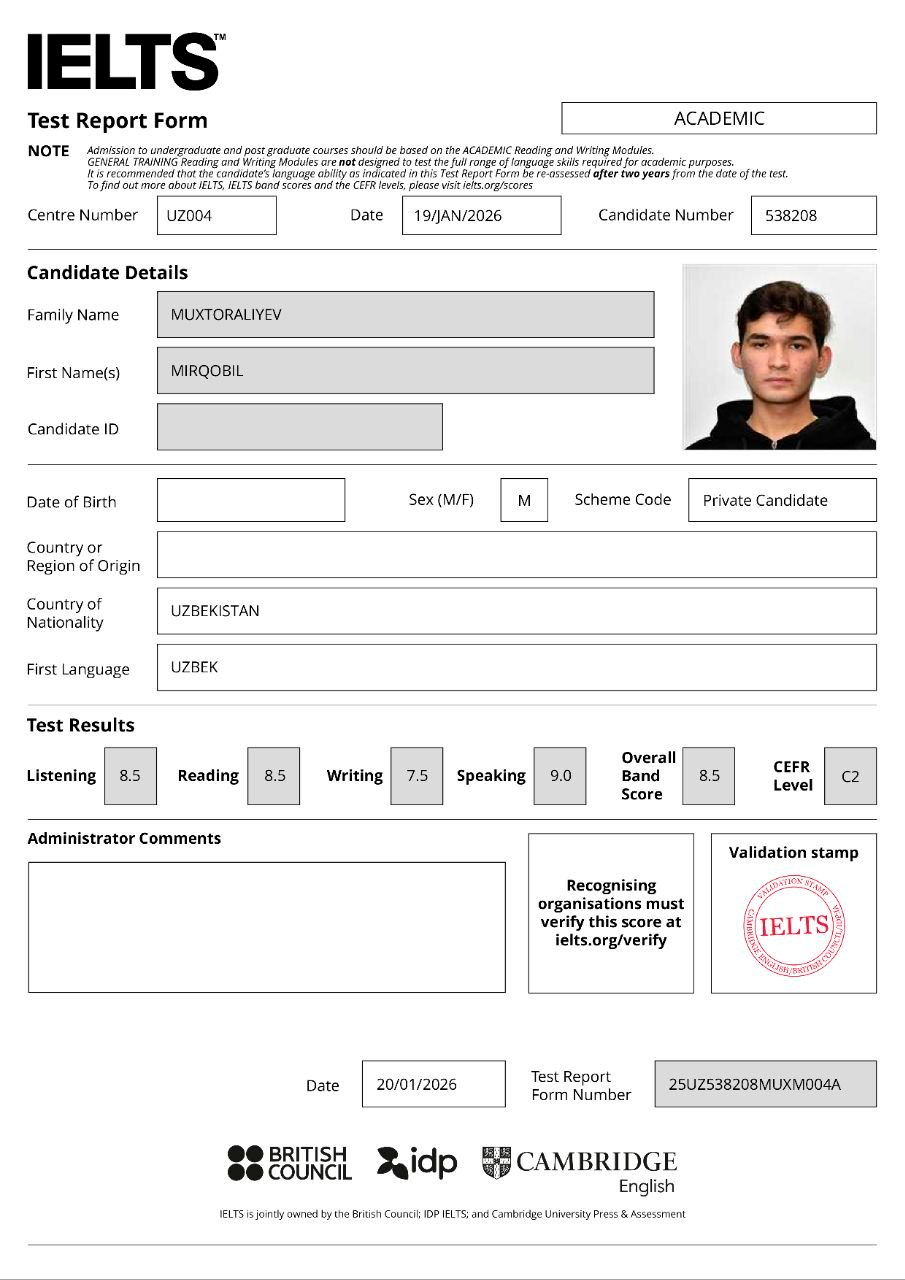
Credentials are shown publicly so candidates know exactly who is assessing their productive skills.
Criterion-based Writing assessment.
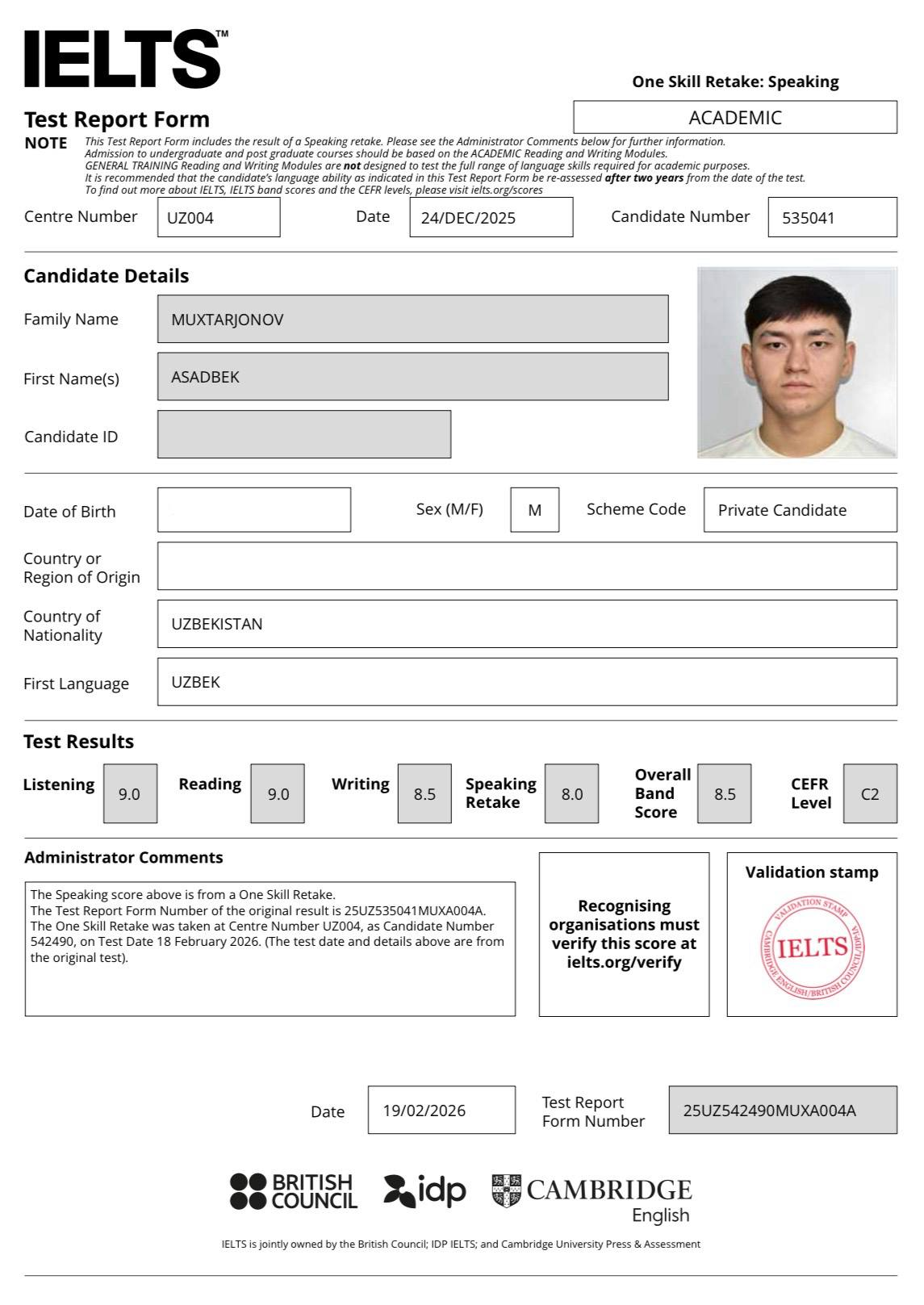
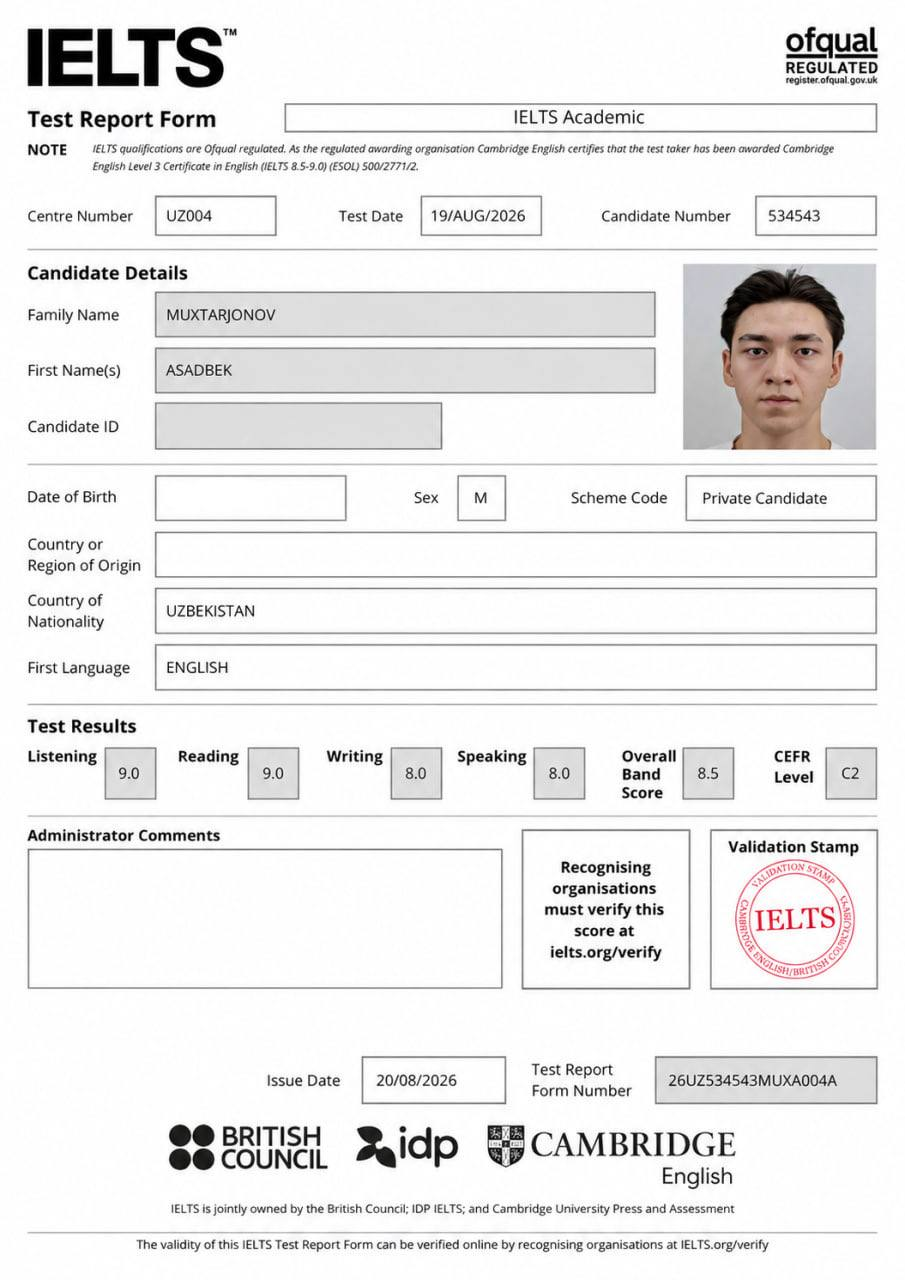
Criterion-based Speaking assessment with clear band-focused feedback after the mock.
Message us directly on Telegram for Mockly questions, access information and support.
Complete Listening, Reading, Writing and Speaking in one connected mock experience. Writing and Speaking are assessed by Mockly examiners, and your released result appears in your personal account.
Payment is linked to your candidate account. If you are not signed in, Mockly will ask you to sign in or create an account first.
Your purchase and future result stay connected to one candidate profile.
The payment page shows the amount and transfer details clearly.
Submit the receipt from your account. The reference number is optional.
Once payment is approved, your dashboard guides you directly to Listening.
Already signed in? You will go straight to Payment. New to Mockly? Create your account first.
Sign in to access your Mock Test 1, payment, progress and results.
Your next step, Mock Test 1 progress and results — all in one place.
Listening · Reading · Writing · Speaking · Human assessment · Result report
Your Candidate ID is created automatically after your payment is approved.
Your personal information and Mockly access.
Transfer exactly 189,000 UZS, then upload your payment receipt. The transaction/reference number is optional.
Your results appear here after an examiner releases your report.
Enter the Candidate ID and passcode issued for Mock Test 1.
Continue Mock Test 1, check your component status and follow your progress from one place.
Your Listening and Reading scores remain hidden. Writing is assessed by an examiner, and your final report will be shared privately after all four sections are complete.
Your Mockly identity and current mock access.
This profile is ready for the next stage of Mockly, where future mock purchases and reports can live under one candidate account.
40 questions • 4 parts • audio plays once • no pausing or restarting
America’s national parks are one of the country’s most remarkable and influential initiatives. The concept of the national park originated in America, though it was quickly replicated by similar parks in Canada, Finland, New Zealand, Australia and elsewhere. The first American national park was Yellowstone, created in 1872. Yellowstone comprises some 3,500 square miles of wilderness and today attracts more than four million visitors a year. Since 1872, nearly 60 additional national parks have been established in the USA, incorporating almost every type of natural environment, from mountains to deserts, lakes, rivers and coastlines. They are administered by the National Parks Service (NPS), which also manages significant monuments and historic structures such as the Statue of Liberty, the Gettysburg Museum and Ford’s Theatre, where President Lincoln was assassinated.
The creation of the national parks came in response to a growing attachment to the natural world that was developing in American society. In 1832, the painter George Catlin dreamed of creating ‘a nation’s park’ to preserve the grasslands in the state of South Dakota. Catlin failed to see such a park established in his lifetime, but his vision lived on. Four years later the writer Ralph Waldo Emerson published an important essay entitled ‘Nature’ in which he argued that natural landscapes should be protected rather than exploited for agriculture and commerce. The campaigner Frederick Olmsted went further, claiming that every American, not only the wealthy and powerful, had the right to access places of natural beauty. The creation of a public park in the Yosemite Valley was directly the result of his work.
The development of the national parks was a process that continued through the late 19th century and the early 20th century. The establishment of the first park at Yellowstone in 1872 was perhaps the defining moment in this process. The Yellowstone national park not only preserved the headwaters of the Mississippi, Colorado and Snake rivers, but also provided a sanctuary for countless endangered species by imposing a ban on hunting in all its forms. Today such an initiative would be commonplace but in these earliest days of the conservation movement, many Americans still regarded it as their right to shoot or trap wild animals.
Yellowstone was followed by Sequoia (1890), Mount Rainier (1899), Crater Lake (1902) and Wind Cave (1903), among many other parks. But while the creation of additional parks enjoyed wide popular support, there were frequent disagreements about their purpose. For some, the primary goal was the protection of the natural world, while for others the parks were about providing public access to nature. These two goals were at times contradictory and led to a variety of competing voices and factions. In recognition of the difficulties of running these vast wilderness areas, their management was for many years placed in the hands of the military, rather than the federal or state government.
The late 19th century was also a time when railroads were being constructed across America. Increasingly, these ran through even the most remote areas, where many parks were located, making tourism possible in these locations for the very first time. While this was welcomed by many park supporters, others were concerned that visitors should appreciate the parks in particular ways. Nathaniel Langford was instrumental in setting up Yellowstone and saw the park as an ideal opportunity for the education of ordinary citizens in all aspects of the natural world and environmental conservation, which was his number one priority.
In the early 20th century, the first really significant development was the setting up of the NPS in 1916. Now for the first time a single body was charged with administering the network and managing the numerous groups and interests that had a stake in it. Stephen Mather was appointed as the first Superintendent of Parks and under his leadership seven new parks were established, including Grand Canyon, Hawaii and Mount McKinley. However, arguably even more important was Mather’s transformation of the hitherto poorly managed finances of the parks.
The NPS generally saw the primary role of the parks as being environmental protection. For this reason, most human activities were regulated – farming and forestry were certainly not allowed. However, the controversial decision to permit the construction of dams in national parks was made on the basis that the resulting supplies of water and hydroelectric power would be in the public interest. Certainly, visitor numbers were unaffected as park admissions increased every year. Then in the 1930s the number of visitors expanded dramatically, largely because mass-produced automobiles became affordable, allowing ever more city-dwellers to reach the park network. With this, the national parks assumed a pre-eminent position in the social fabric of America, a legacy that continues to the present day.
The table shows the amount of money given to developing countries by the USA, EU countries and other countries from 2006 to 2010 (Figures are in millions of dollars).
Summarise the information by selecting and reporting the main features, and make comparisons where relevant.
Your Speaking test is conducted live, one-to-one, with your Mockly Speaking examiner.
Sign in with your Mockly examiner account.
Examiner data is loaded from Supabase, not from this browser.
| Candidate | Amount | Reference | Receipt | Status | Submitted | |
|---|---|---|---|---|---|---|
Loading payments… | ||||||
| Candidate | Listening | Reading | Writing | Speaking | Report |
|---|